Arp 204 · DeepCR Demo
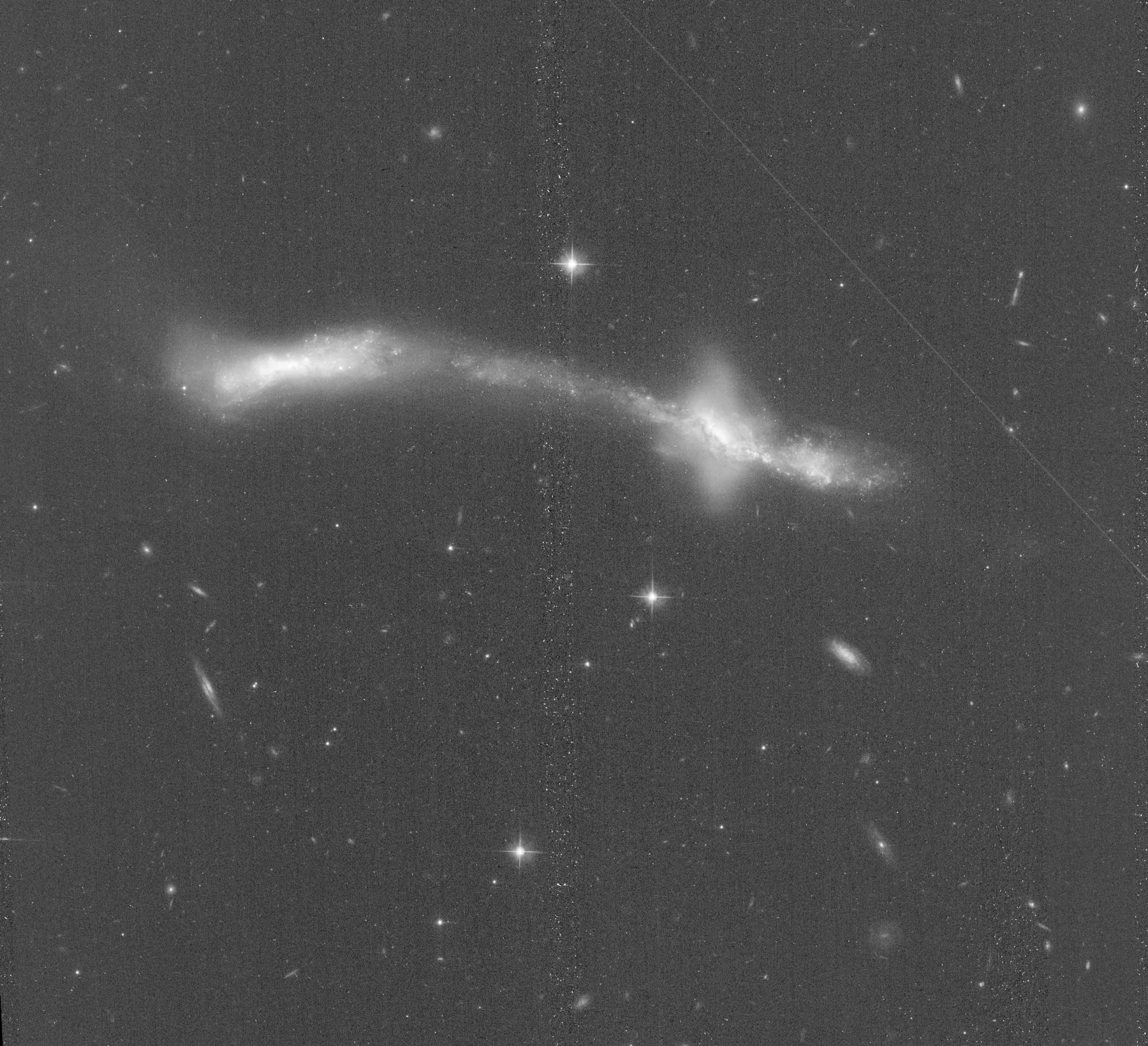
Drag anywhere across the image to compare the raw frame and the DeepCR output. Notice how the deep learning model effectively removes cosmic rays while preserving the galaxy structure.
- Deep Learning detection trained on massive datasets.
- Native 32-bit support without rescaling issues.
- Simple Parameters: just choose a model and threshold.
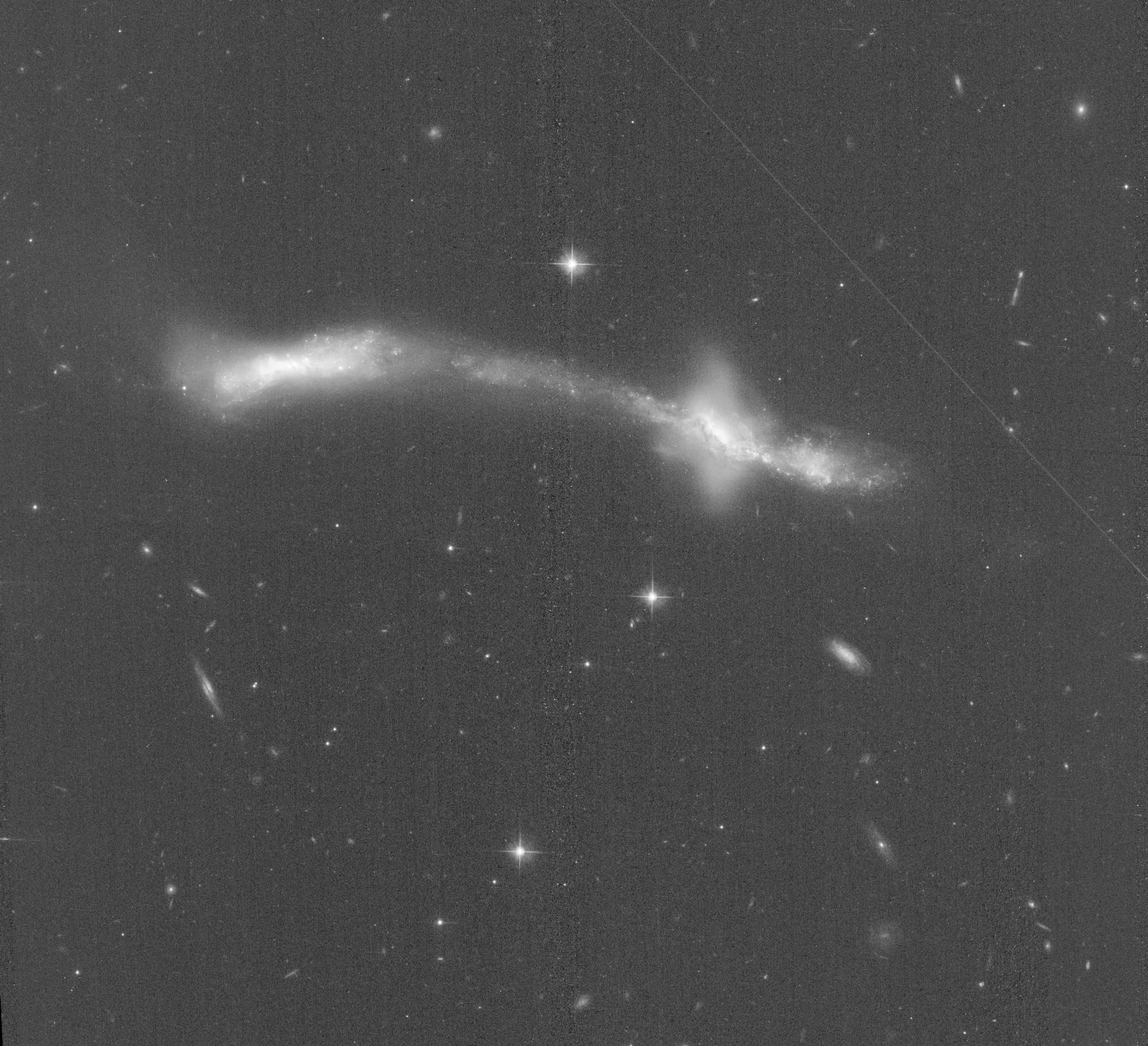
 Raw Input
Cleaned
Raw Input
Cleaned
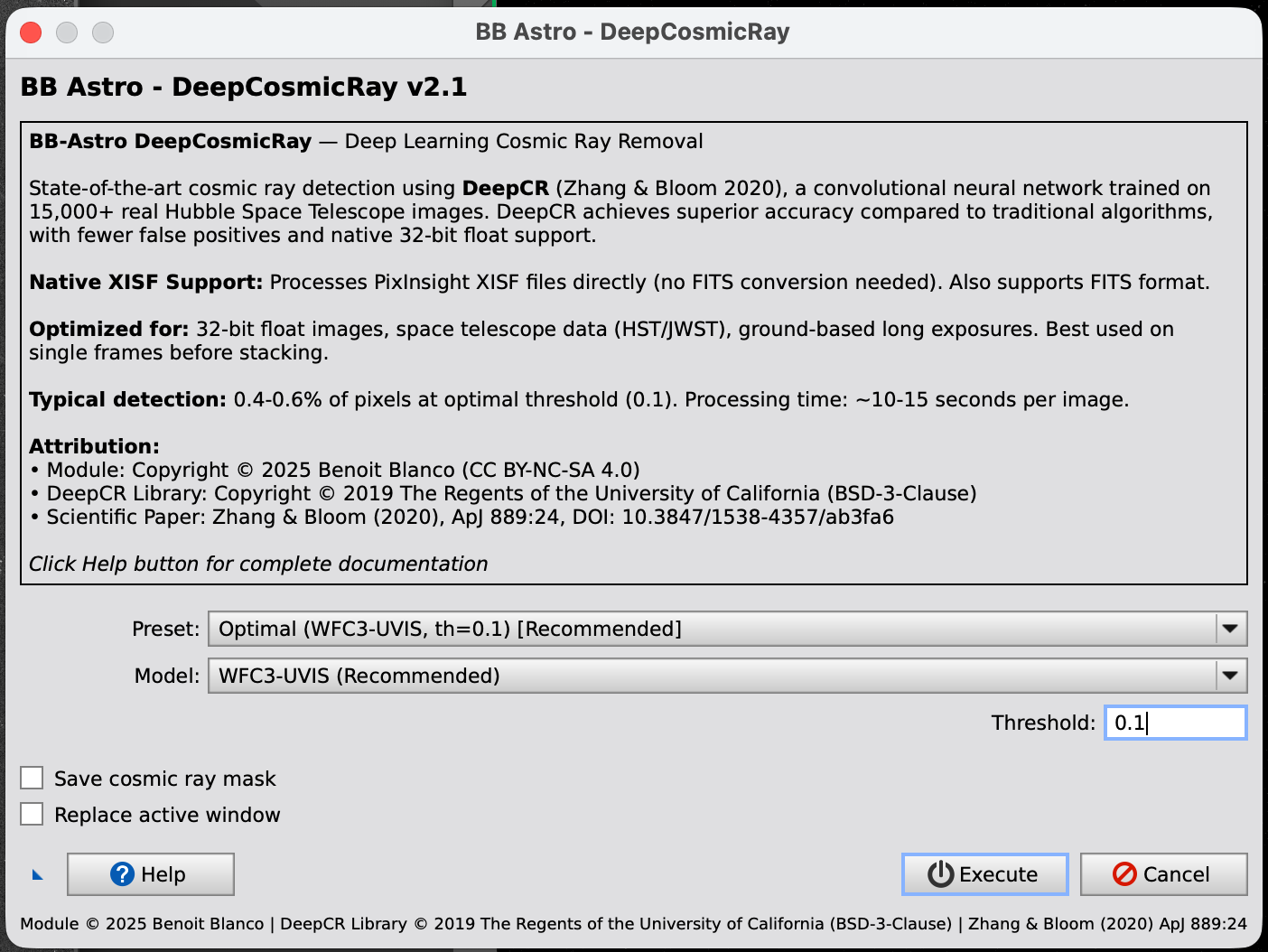
PixInsight Interface
A streamlined interface for easy operation. Select your model, set the threshold, and execute.
Recommended Settings
DeepCR offers specific models and thresholds for different data types.
- 32-bit Float (Common): Optimal Preset (WFC3-UVIS, Threshold 0.1).
- Space Telescope (HST/JWST): Optimal or ACS Default (Threshold 0.1-0.2).
- Ground-Based Long Exp: Optimal (Threshold 0.10-0.15).
- Faint Sources: Conservative (Threshold 0.2).
Comparison with LACosmic
While LACosmic is excellent, DeepCR leverages deep learning for superior results in many cases.
- Method: Deep Learning vs Edge Detection.
- Accuracy: Higher accuracy with fewer false positives on faint stars.
- Speed: Comparable (~10-15 sec).
- Simplicity: 2 simple parameters vs 8+ complex ones.
Scientific Background
This module is based on the work of Zhang & Bloom (2020). It uses a U-Net architecture trained on over 15,000 labeled HST images to identify cosmic rays with high precision.
Citation: Zhang, K., & Bloom, J. S. (2020). Identifying Cosmic Rays in Astronomical Images Using Deep Learning. The Astrophysical Journal, 889(1), 24.